
Transforming Organizational Structure, Role Clarity & Workforce Effectiveness
A major integrated steel manufacturing company was facing organizational and workforce inefficiencies that were affecting productivity, decision-making, employee capability, and its ability to scale effectively.
With 200+ staff and workforce roles across a high-volume steel manufacturing operation, the organization needed greater clarity around roles, responsibilities, decision-making authority, workforce utilization, and career progression.
Production Modeling India’s (PMI) HR consulting team conducted a comprehensive organizational design and workforce assessment to identify structural gaps, improve role clarity, strengthen talent systems, and create a more scalable organizational framework.
Project Snapshot
Sector: Steel Manufacturing
Scope: 200+ Staff & Workforce Roles
Project Duration: Approximately 10–12 Weeks
Plant Context: Integrated Steel Manufacturing
Location: Tadipatri Plant, Telangana/Andhra Pradesh Region
The Client Context
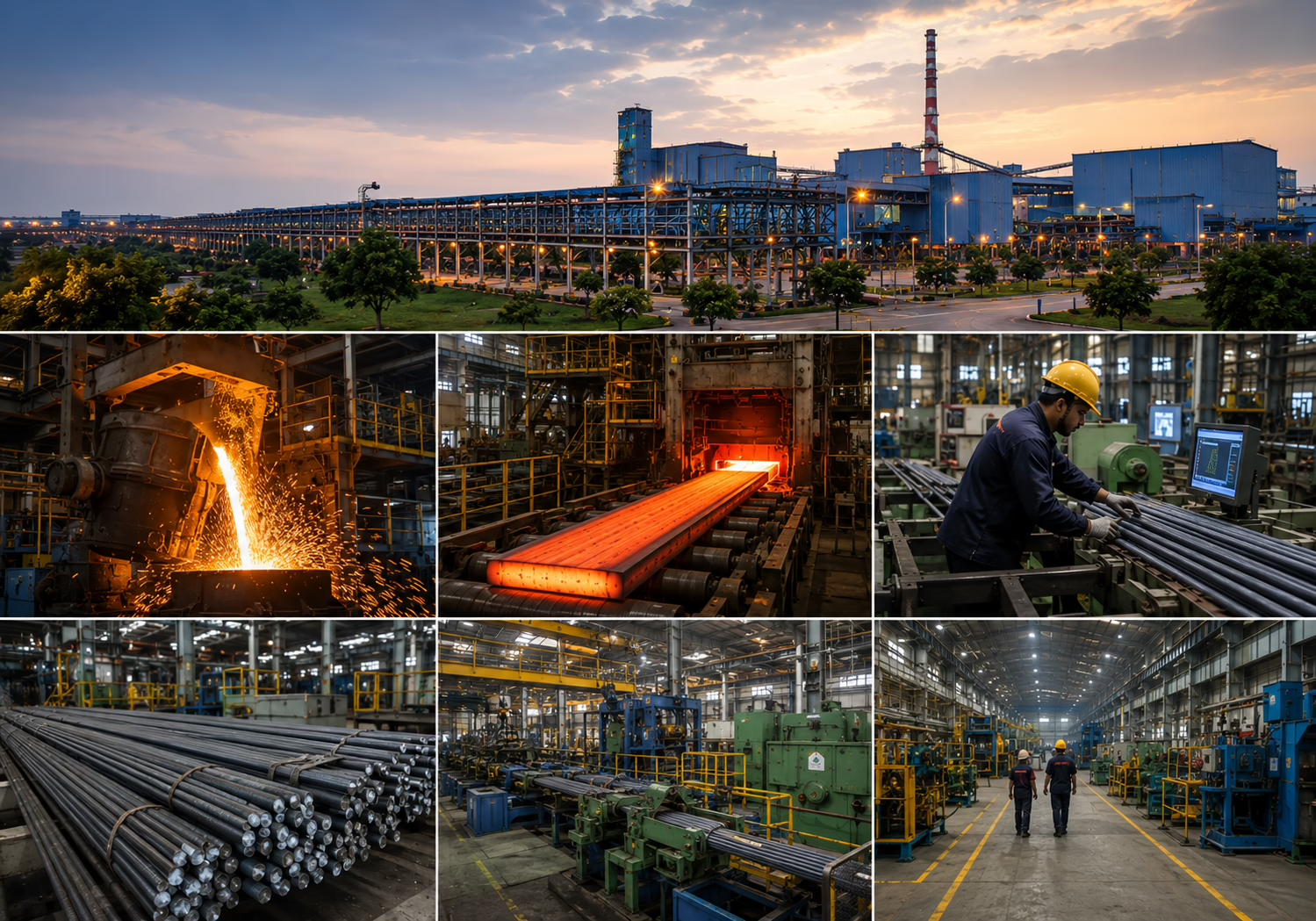
The client is an integrated steel manufacturing company focused on producing high-quality long steel products.
Its Tadipatri plant operates several critical production and support functions, including:
- Steel Melting Shop
- Rolling Mill
- Inspection Line
- Value Addition
- Other supporting functions across the manufacturing ecosystem
The plant operates in a high-volume, process-driven manufacturing environment, where productivity, quality, workforce capability, and continuous improvement are critical to business performance.
As the organization continued to evolve and prepare for future growth and automation, it became important to evaluate whether its existing organizational structure and workforce practices were aligned with its business requirements.
The Organizational Challenge
The organization was experiencing several challenges related to structure, accountability, workforce capability, and employee development.
Facing similar organizational bottlenecks at your plant?
Unclear roles, workforce inefficiencies, capability gaps, and slow decision-making can limit manufacturing performance.
Our Approach
PMI combined organization design methodologies, workforce assessment, employee inputs, benchmarking, and PIVOT-based analysis to develop a practical improvement roadmap.
The engagement focused not only on identifying organizational gaps but also on translating those findings into actionable recommendations for the client’s future growth.
Workforce & Organizational Assessment
PMI assessed executive, non-executive, and contractual manpower to understand:
• Workforce utilization
• Workload distribution
• Role effectiveness
• Organizational layers
• Span of control
• Role duplication and gaps
• Functional alignment
This provided a data-driven view of the organization’s existing workforce structure.
Employee & Stakeholder Engagement
To understand organizational effectiveness from multiple perspectives, PMI conducted:
• 1:1 employee interviews
• Focus Group Discussions (FGDs)
• Employee surveys
• Stakeholder interactions
• Qualitative and quantitative assessments
These interactions helped identify organizational issues that may not have been visible through workforce data alone.
Organization Structure Benchmarking
PMI conducted a secondary study to benchmark the organization’s structure against leading players in the steel industry.
The benchmarking exercise provided an outside-in perspective on organizational structures, roles, and management practices across the sector.
The insights helped identify opportunities to improve organizational layers, accountability, role alignment, and future scalability.
Building the Organization for Future Growth
Based on the assessment, PMI developed recommendations covering critical organization and workforce elements, including:
• Key Result Areas (KRAs)
• Job descriptions
• Role clarity
• Skills matrix
• Succession planning
• Organization structure
• Role and responsibility alignment
• Talent visibility
• Capability development
• Automation opportunities
• Process improvement opportunities
The objective was to create an organization that could operate with greater accountability, faster decision-making, and stronger workforce capability.
PIVOT-Based Organizational Insights
PMI also used the PIVOT framework — Positives, Issues, Voids, Opportunities, and Threats — to convert organizational observations into structured and prioritized recommendations.
This helped the leadership team distinguish between
Positives: Existing strengths that could be leveraged further.
Issues: Current organizational and workforce challenges requiring intervention.
Voids: Missing systems, capabilities, roles, or processes.
Opportunities: Areas where organizational improvements could create additional value.
Threats: Potential organizational risks that could affect future growth and execution.
The framework provided a structured basis for prioritizing improvement initiatives.
Want to see how the PIVOT framework applies to your organization?
Let’s assess your organization structure, workforce utilization, roles, capabilities, and future requirements.
Key Outcomes & Impact
The engagement helped establish a stronger organizational foundation for sustainable growth.
The PMI Difference future growth, process improvements, and automation
Organizational transformation is not simply about changing reporting structures.
It requires understanding people, roles, processes, capabilities, decision rights, and business objectives together.
PMI combines organizational assessment with data-driven analysis and practical implementation-oriented recommendations to help manufacturing organizations build more effective and scalable operating structures.
Our approach connects:
Workforce Assessment → Organization Design → Role Clarity → Capability Development → Performance Systems → Future Readiness
Conclusion
For large-scale manufacturing organizations, sustainable growth requires more than increasing capacity. It requires an organization structure that enables people to make decisions faster, perform their roles effectively, develop the right capabilities, and support the company’s strategic direction.
Through a structured assessment of 200+ roles, employee interactions, workforce analysis, benchmarking, organization design, and PIVOT-based insights, PMI helped establish a stronger foundation for role clarity, accountability, talent visibility, and organizational scalability.
Ready to build a more effective and scalable organization?
Talk to PMI’s consulting team about your organization’s workforce and organizational design requirements.