Building a Scalable Job Description Framework Across Functions, Levels, and Manufacturing Sites

A US-headquartered global pharmaceutical company with large-scale manufacturing operations in India was facing a fundamental organizational challenge: how to create consistent role definitions across more than 1,100 roles spanning multiple plants, functions, and hierarchy levels.

As the organization continued to grow, differences in job descriptions, role expectations, ownership, and accountability were creating complexity across locations.

Production Modeling India Pvt. Ltd. (PMI) partnered with the organization to design and implement a standardized Job Description (JD) framework, enabling role clarity and consistency at scale.

The engagement resulted in standardized JDs for 1,200+ roles, creating a structured foundation for performance management, hiring, capability building, and future organizational growth.

Project Snapshot

Industry: Pharmaceuticals

Scope: ~1,200 roles

Duration: ~3 months

Geographic Presence: Multiple manufacturing locations in India

Organization Revenue: ~₹75 Crore

Growth Objective: 2X growth

US-headquartered global pharmaceutical company

The Client Context

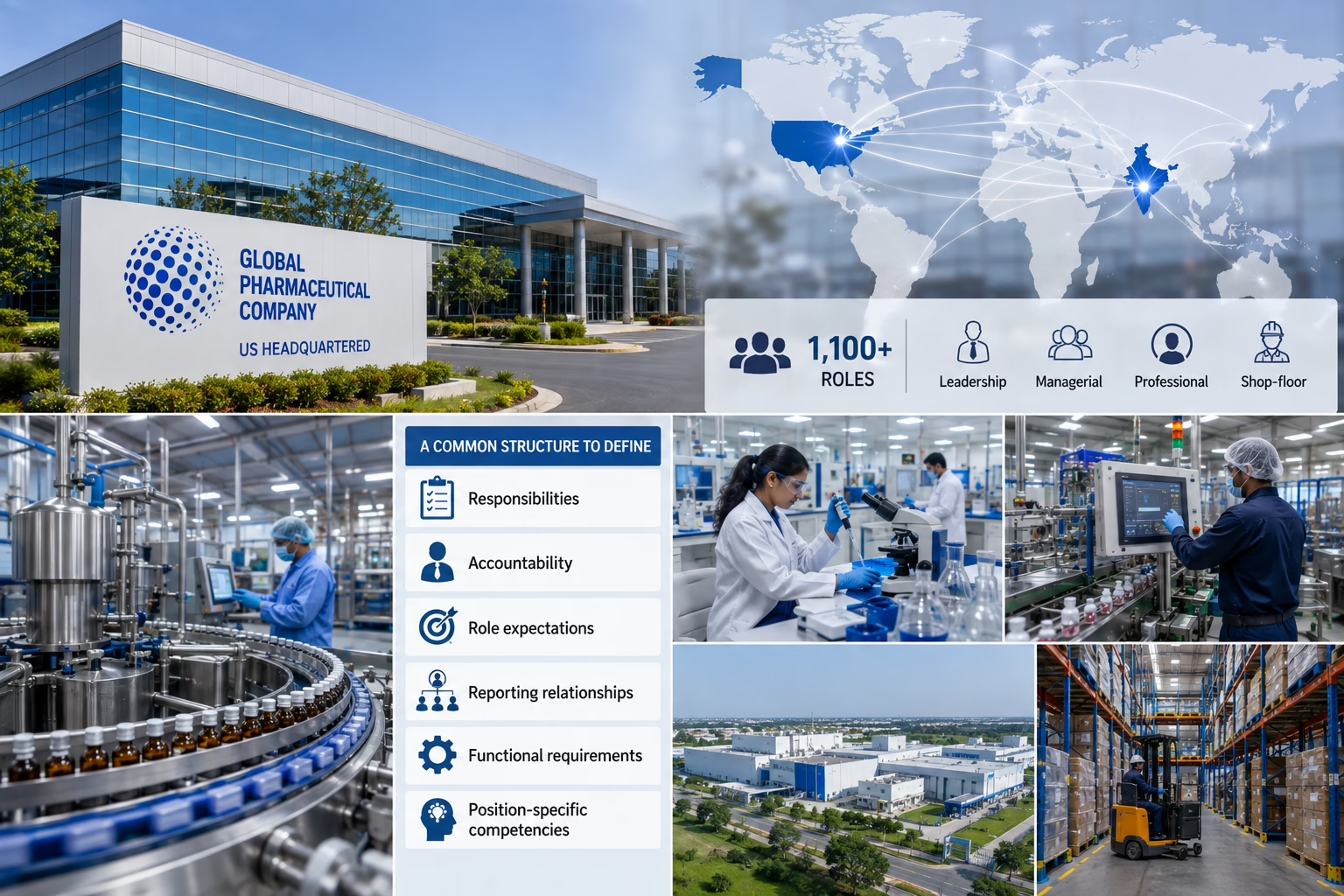
The client is a US-headquartered global pharmaceutical company with large-scale manufacturing operations in India.
The organization operates across multiple manufacturing plants, with more than 1,100 roles covering leadership, managerial, professional, and shop-floor levels.
As the organization expanded, maintaining consistent role definitions across functions and locations became increasingly challenging.
Different roles required a common structure that could clearly define:

• Responsibilities
• Accountability
• Role expectations
• Reporting relationships
• Functional requirements
• Position-specific competencies
The organization therefore needed a scalable and standardized approach to Job Description development that could work across its diverse functions, hierarchy levels, and manufacturing locations.


The Challenge

Creating Consistent Role Definitions Across a Complex Organization

With more than 1,100 roles across multiple plants and functions, the organization faced several challenges in maintaining consistency and clarity.

Key challenges included:

• Absence of standardized Job Descriptions across functions and hierarchy levels.
• Inconsistent role clarity, ownership, and expectations across different sites.
• High complexity in managing 1,188 roles across multiple bands and functions.
• Lack of a common framework for defining and maintaining roles.
• Need for a scalable governance mechanism to standardize roles as the organization grows.

Without a consistent role architecture, differences in job definitions could affect several downstream processes, including performance management, recruitment, capability development, and organizational planning.

The Business Need

The organization needed more than a one-time exercise to rewrite Job Descriptions. It needed a repeatable framework that could:

• Standardize role definitions across the organization.
• Create clarity around responsibilities and accountability.
• Scale across 1,200+ roles, functions, and locations.
• Support governance and future updates to role definitions.
• Connect role clarity with broader people and performance processes.

Is Role Ambiguity Affecting Your Organization?

PMI can help organizations assess their existing role architecture and build a standardized Job Description framework aligned with business requirements.

PMI’s Approach

A Customized and Iterative JD Framework for Role Clarity at Scale

PMI developed a structured approach to standardize Job Descriptions across the organization’s functions, hierarchy levels, and locations.
Rather than applying a single generic template to every role, the approach was customized to the client’s organizational structure and requirements.
The framework was developed iteratively, with stakeholder feedback and validation incorporated throughout the process.

What We Did

PMI developed and presented multiple Job Description template options to the client. The templates were evaluated against organizational requirements, usability, role complexity, and scalability. Based on stakeholder inputs, PMI customized and finalized a JD framework aligned with the client’s specific needs.
The organization’s roles were structured across different hierarchy levels and bands. PMI analyzed the role landscape to understand the breadth and complexity of the organization’s positions. This exercise helped establish a structured foundation for developing standardized JDs.
Key anchor roles were identified to establish a consistent reference point for detailed Job Description development. These roles helped define the structure and standards that could subsequently be applied across similar roles.
Job Descriptions were developed through an iterative process involving relevant stakeholders. Drafts were reviewed, refined, and validated to ensure that the final JDs accurately reflected organizational requirements and role expectations. This collaborative approach helped improve both accuracy and stakeholder acceptance.
Once the framework was validated, the approach was scaled across the organization’s roles and functions. The result was a standardized JD structure that could be applied consistently across multiple sites and organizational levels.

The PMI Framework

Standardize → Structure → Validate → Scale

Standardize
Create a common JD structure and documentation standard.

Structure
Map roles across bands, functions, and organizational levels.

Validate
Review and refine JDs with relevant stakeholders.

Scale
Apply the validated framework across 1,200+ roles.

This approach ensured that role standardization was not limited to individual departments but became an organization-wide framework.

Build a Standardized Role Architecture

Let’s discuss how PMI can help you standardize roles, improve accountability, and create a scalable foundation for organizational growth.

Impact Delivered

Standardized Role Clarity Across 1,200+ Roles

The engagement enabled the organization to move from fragmented role definitions toward a consistent, scalable, and governance-driven Job Description framework.

Key outcomes included:

1,200+ Standardized Job Descriptions

PMI delivered standardized JDs covering 1,200+ roles, creating consistency across functions, hierarchy levels, and manufacturing locations.

Improved Role Clarity and Accountability

Clearly structured Job Descriptions helped establish better understanding of responsibilities, ownership, and expectations across sites and functions.

Scalable JD Framework

The organization gained a structured framework that can be used for ongoing role definition, review, and updates as business requirements evolve.

Stronger Foundation for People Processes

The standardized role architecture created a stronger foundation for:
• Performance Management
• Recruitment and Hiring
• Employee Capability Building
• Role Evaluation
• Organizational Planning
• Workforce Development

Improved Organizational Consistency

A common approach to Job Description development helped reduce variation in how roles were defined across different functions and locations.

Managing hundreds or thousands of roles?

PMI can help you create a standardized role framework that improves clarity today and supports organizational growth tomorrow.

    Download Our Company Brochure