Introduction
Walk into almost any leadership or HR meeting lately, and OKRs come up before long. Objectives and Key Results went from a Silicon Valley buzzword to something most growing companies experiment with, and a whole industry of software has grown up around it.
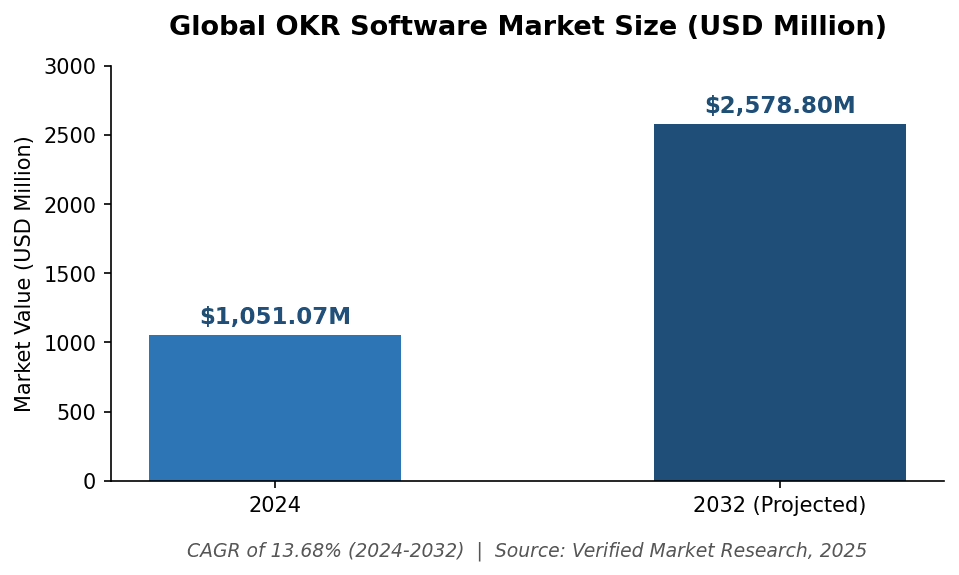
The numbers support that. The global OKR Software market was valued at roughly USD 1,051.07 million in 2024 and is projected to hit USD 2,578.80 million by 2032, a CAGR near 13.68% [1]. That growth spans companies of every size, from five-person startups to thousand-person enterprises, all moving away from spreadsheets and quarterly slide decks.
Platforms aren’t in short supply, and on paper most of them sound nearly identical – same buzzwords, same promises, same screenshots of tidy dashboards. The real question is which one will actually fit your team’s culture and goals rather than just look good in a sales deck, and that’s the part worth spending time on.
Why Organizations Need OKR Software
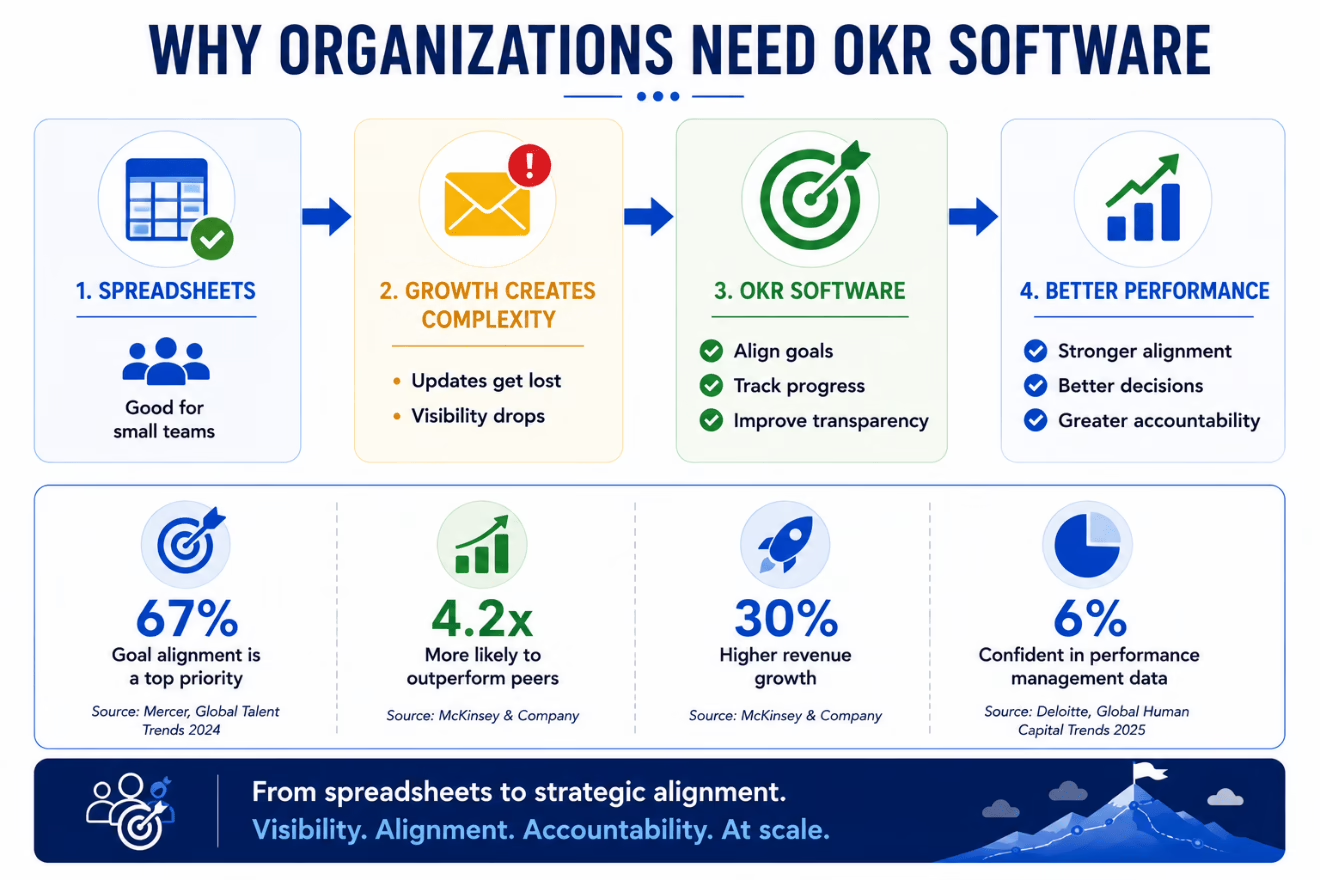
First, the obvious question: why not just use a spreadsheet? Plenty of teams do, and for five or ten people that’s usually fine. Once you grow past that, though, things start slipping – emails pile up with goal updates nobody reopens, numbers go stale within days, and by quarter-end half the room is guessing at where things actually stand.
That’s the gap OKR software is meant to fill. A decent goal setting software doesn’t just keep a list of objectives; it makes them visible, so a new hire on day one can open the dashboard and see how their work connects to what the company is trying to achieve. Mercer’s 2024 Global Talent Trends survey found that 67% of companies see aligning individual goals with business outcomes as a top priority, but most admit they’re not moving fast enough [2]. In other words, that’s the gap good OKR tooling is built to close.
This isn’t only a feel-good HR initiative, either. McKinsey found that companies focused on people performance are 4.2 times more likely to outperform their peers, with roughly 30% higher revenue growth and lower attrition [3]. When people have clarity on what matters and how they’re tracking, they tend to do better work, and that’s exactly what an employee goal management software is meant to enable at scale, without someone chasing updates manually.
A quick look at the numbers behind all this:
| Statistic | What It Means For You | Source |
| 67% of companies say aligning individual goals with business outcomes is a top priority | Most leaders already know alignment is an issue; they just don’t have a system in place to fix it, which is exactly what OKR software does | Mercer, Global Talent Trends 2024 |
| Performance-focused companies are 4.2x more likely to outperform peers, with ~30% higher revenue growth and 5pp lower attrition | Clear goal tracking isn’t just a soft HR metric. It shows up directly in business results and retention | McKinsey & Company |
| Just 6% of organizations say they’re confident using data to show the value of performance management | Most companies start from a fairly low bar here, so a well-run OKR software rollout can set a company apart | Deloitte, Global Human Capital Trends 2025 |